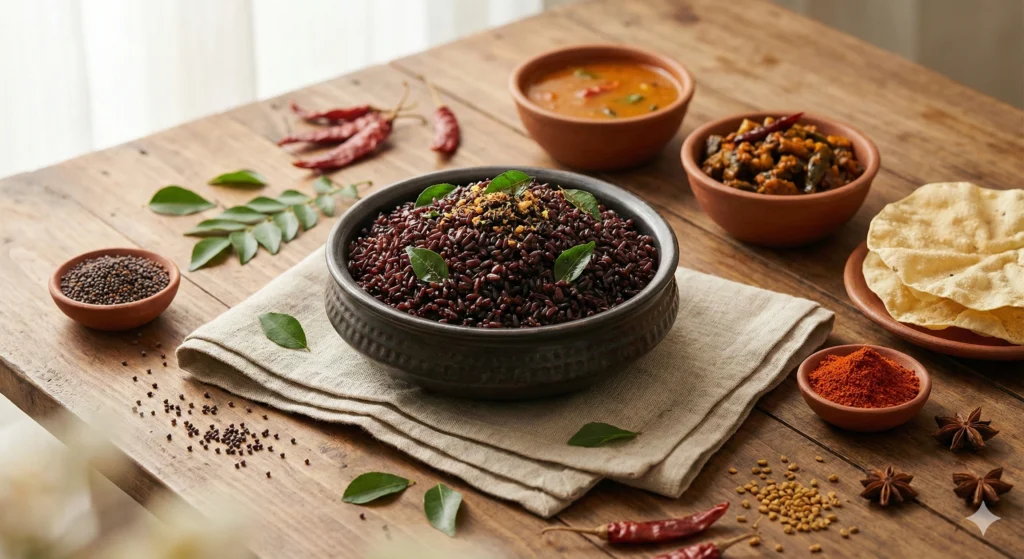
Mappillai Samba rice is a traditional red rice variety from Tamil Nadu, valued for its high nutrition, low glycaemic index, and strength‑building properties. Due to increasing demand, the market is now flooded with adulterated, dyed, mixed, or polished rice sold under the name Mappillai Samba.
This SEO‑ready guide explains how to identify original Mappillai Samba rice using simple, practical tests before and after purchase.
Why Is Mappillai Samba Rice Often Adulterated?
- High demand and limited authentic supply
- Mixing with cheaper modern red rice varieties
- Artificial coloring to imitate the natural red shade
- Excessive polishing that removes nutrients
These practices reduce nutritional value and mislead buyers.
1. Color Test (Visual Inspection)
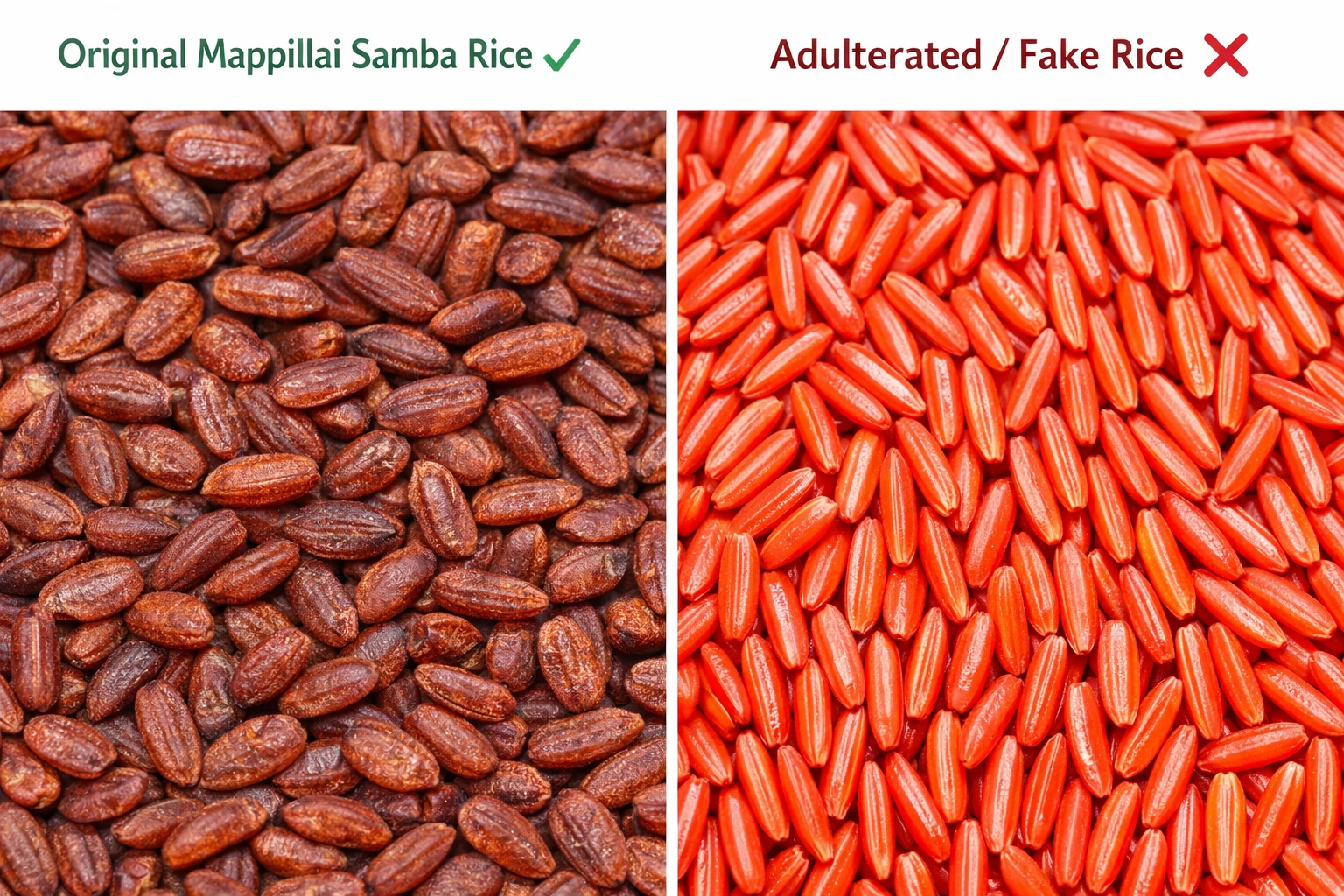
✅ Original Mappillai Samba Rice
- Natural dark reddish‑brown color
- Slight color variation between grains (normal and natural)
❌ Adulterated or Fake Rice
- Very bright red or unusually pale color
- Mixed grains with different shades
2. Grain Shape and Size Test Original
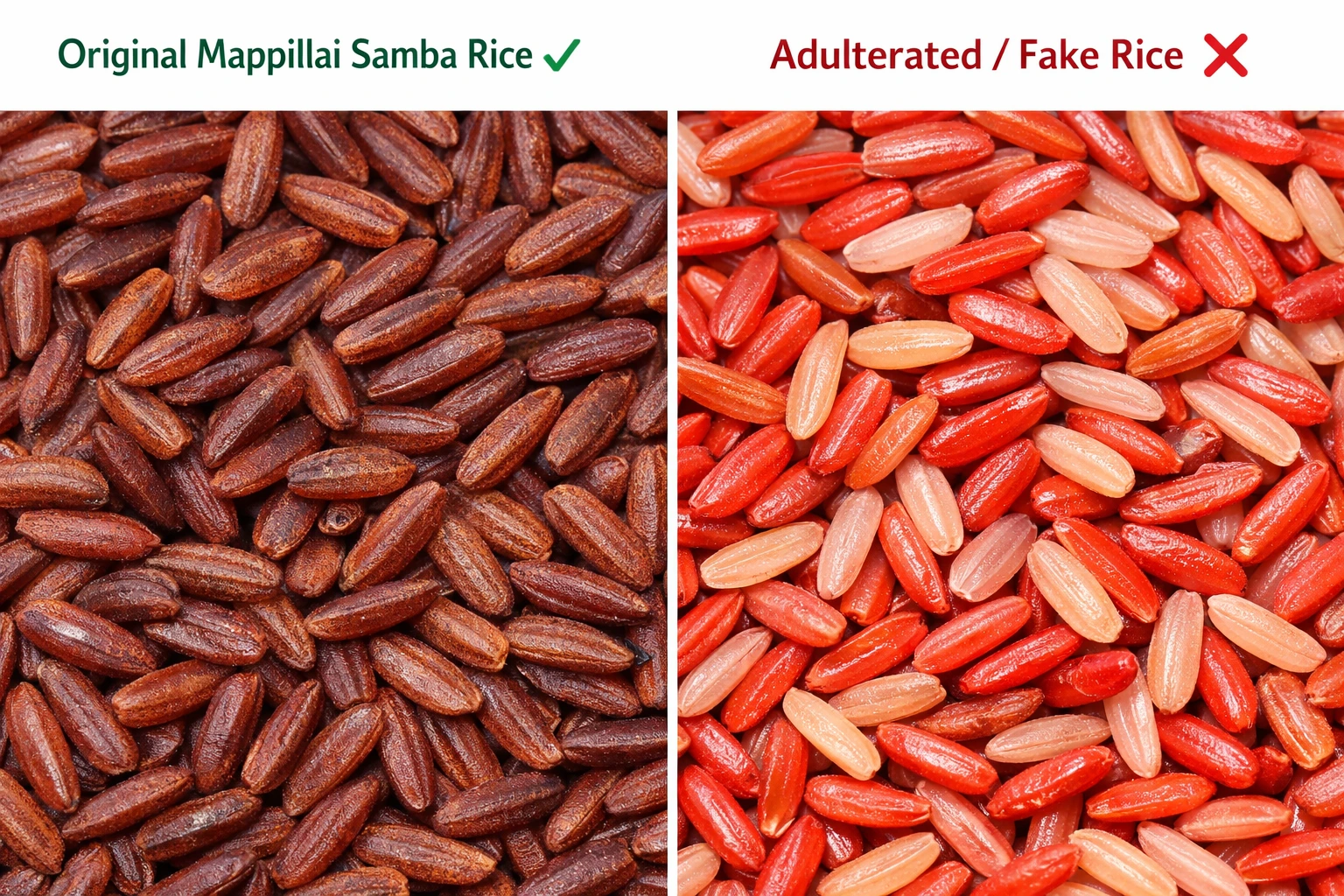
- Short, bold grains (not long or slender)
- Irregular and non‑uniform appearance
Adulterated
- Long or perfectly uniform grains
- Looks factory‑polished
3. Hand Rub Test (Color Transfer Test)
How to test:
- Take a small handful of rice
- Rub it firmly between your palms
Original
- No red color stains on the hands
Adulterated / Dyed Rice
- Red color transfers to the skin
4. Water Test (Dye Detection)
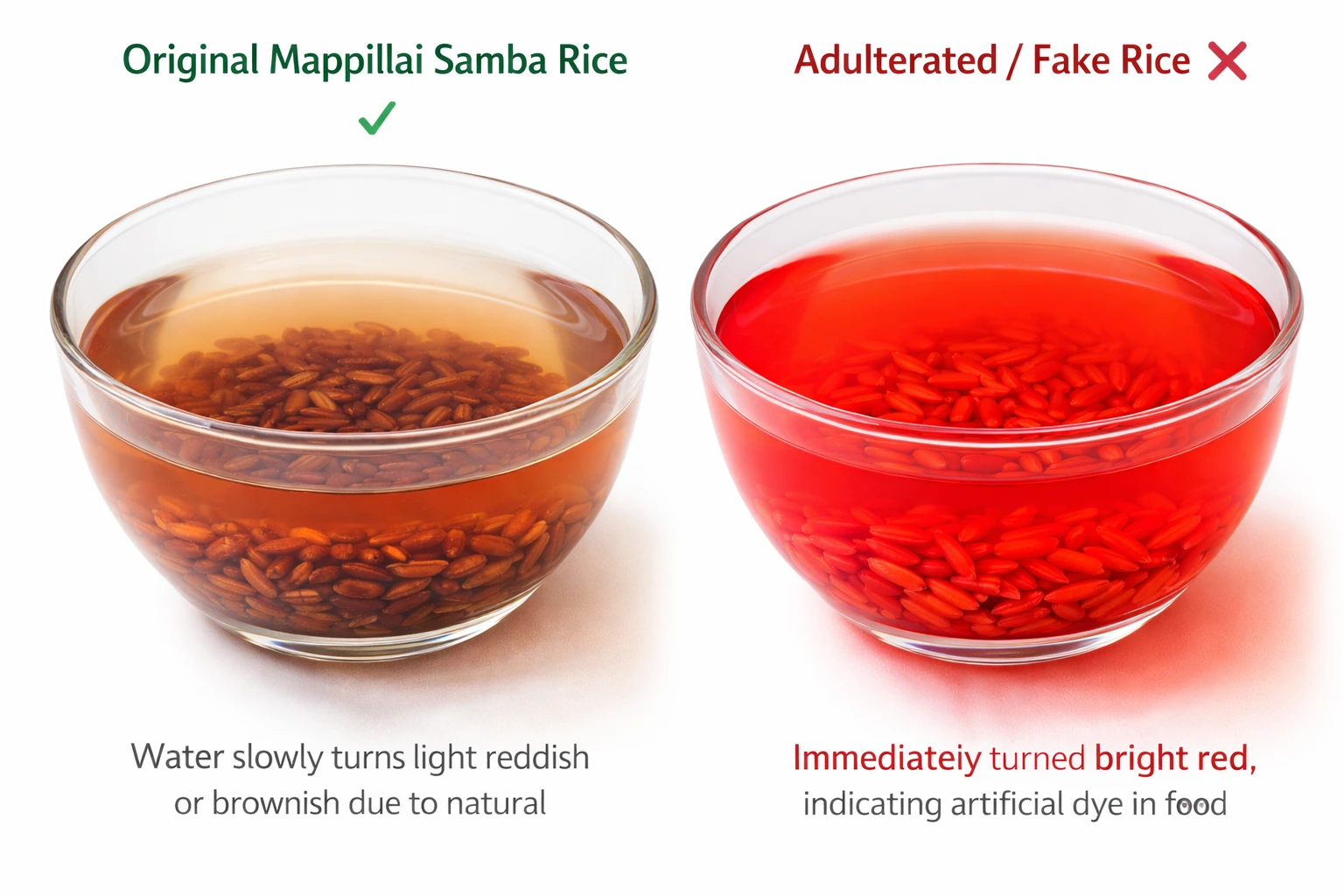
How to test:
- Add a small quantity of rice to a glass of water
Original
- Water slowly turns light reddish or brownish due to natural bran
Adulterated
- Water immediately turns bright red, indicating artificial dye
5. Smell Test Original
- Mild earthy or raw grain aroma
Fake or Over‑Processed Rice
- No smell or slight chemical odor
6. After‑Cooking Test Original Mappillai Samba Rice
- Cooked rice is slightly firm and chewy
- etains reddish‑brown color
- Non‑sticky and filling
Adulterated or Mixed Rice
- Very soft texture
- Looks similar to white rice
- Color fades after cooking
Original vs Adulterated Mappillai Samba Rice (Quick Comparison)
| Feature | Original | Adulterated |
|---|---|---|
| Color | Dark reddish‑brown | Artificial bright red |
| Grain type | Short & bold | Long / uniform |
| Water test | Light color release | Bright red dye |
| Cooked texture | Firm & chewy | Very soft |
| Price | Higher | Very cheap |
To identify original Mappillai Samba rice:
- Check color, grain shape, smell, and texture
- Perform simple hand rub and water tests
- Verify price, label, and source
These steps help you avoid adulterated rice and choose authentic traditional food with full nutritional value.
(FAQ)
Does original Mappillai Samba rice release color in water?
Yes, a light natural color may appear due to the bran layer. Bright red water indicates artificial dye.
Is polished Mappillai Samba rice healthy?
No. Polishing removes fiber and minerals, reducing its health benefits.