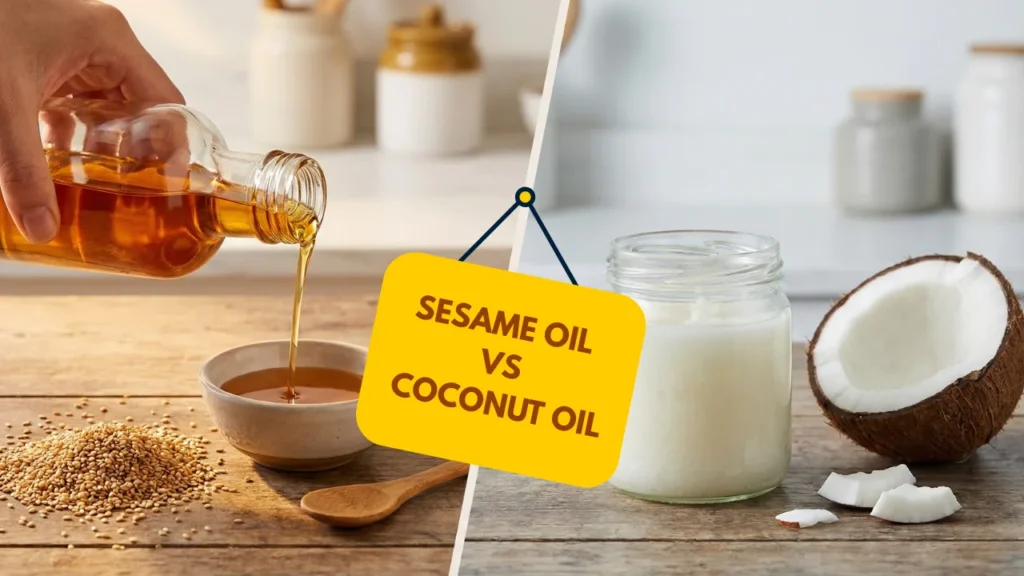
Cold Pressed Sesame Oil vs Coconut Oil – Which is better for cooking?
In every Indian kitchen, oils are more than just cooking ingredients — they’re a part of tradition, health, and taste. Among the healthiest choices, cold pressed sesame oil (also called gingelly oil) and cold pressed coconut oil often take center stage. Both are rich in nutrients, chemical-free, and extracted using the wooden ghani method, but which one is right for you? Let’s compare them in detail.
What is Cold Pressed Sesame Oil?
Cold pressed sesame oil is extracted from premium sesame seeds using a slow, traditional wooden ghani process that retains maximum nutrients. This oil is:
-
Golden in color with a nutty aroma
-
Naturally rich in Vitamin E and antioxidants
-
Known for cholesterol-friendly properties
-
Traditionally used in Tamil Nadu, Andhra Pradesh, and Kerala
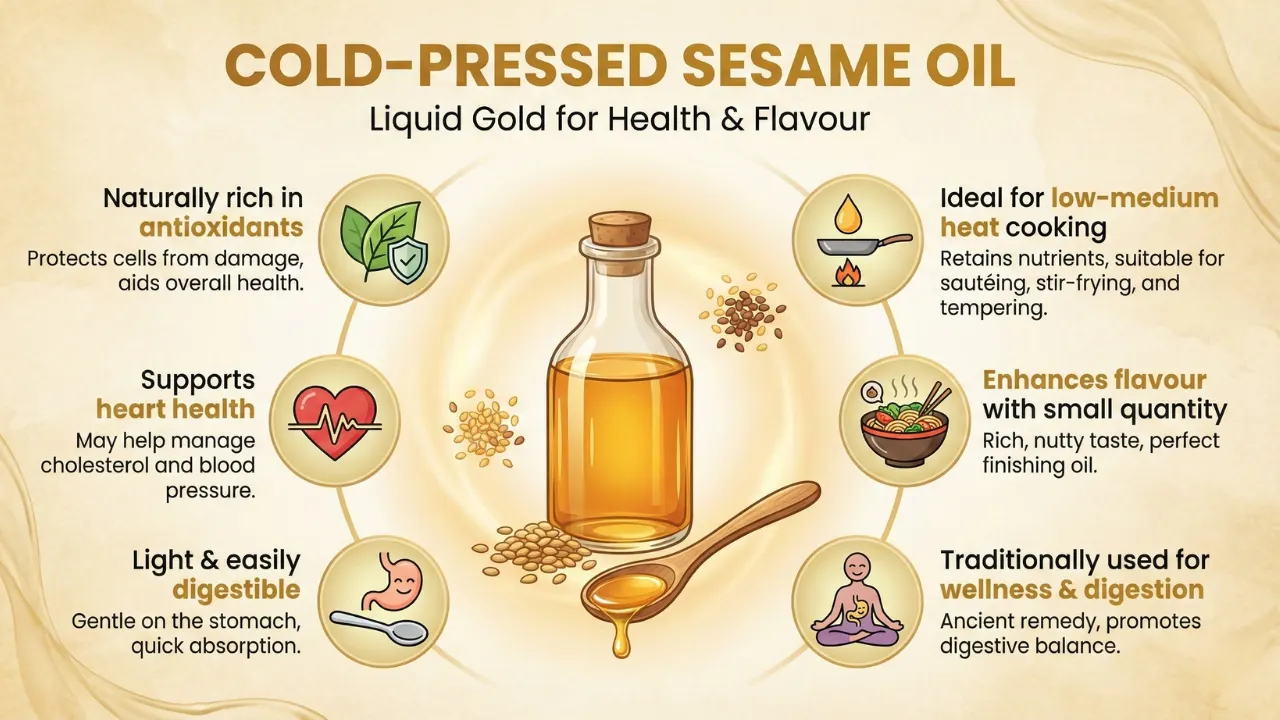
Key Benefits of Cold-Pressed Sesame Oil
-
Supports heart health by balancing cholesterol levels
-
Boosts skin health and delays signs of ageing
-
Strengthens hair roots and adds shine
-
Has a high smoke point — perfect for frying and sautéing
For more detailed insights, check out these expert resources:
What is Cold Pressed Coconut Oil?
Cold pressed coconut oil is a pure, unrefined oil extracted from fresh coconut kernels at low temperatures to preserve nutrients and aroma. Rich in healthy fats and antioxidants, it offers multiple coconut oil benefits for cooking, health, and beauty. In the kitchen, it’s ideal for sautéing, baking, and even deep frying. As a natural oil for hair, it nourishes the scalp, strengthens strands, and promotes shine. For skin, it acts as a gentle moisturizer, helping to soften and protect against dryness. Chemical-free and versatile, cold pressed coconut oil is a healthy choice for both your diet and personal care routine.
-
Rich in Medium Chain Triglycerides (MCTs), which boost metabolism
-
Naturally antibacterial and antifungal
-
Popular in Kerala, coastal Karnataka, and Sri Lanka
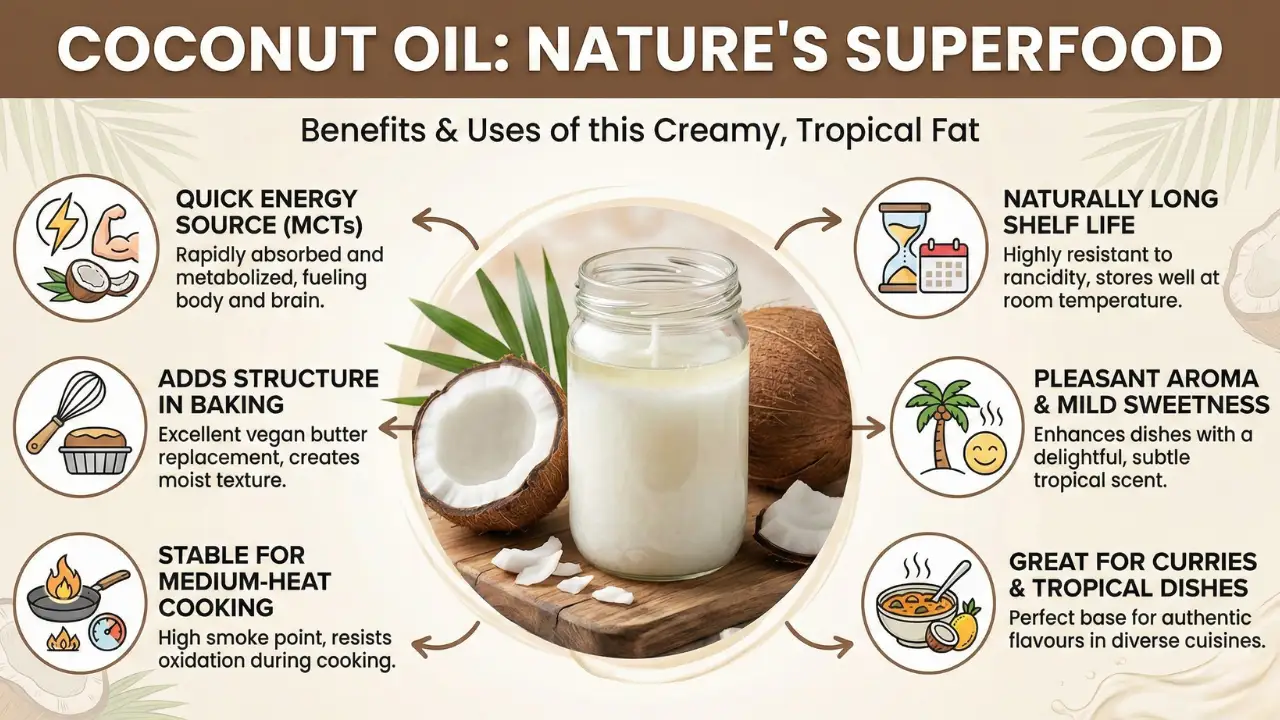
Key Benefits of Cold Pressed Coconut Oil
-
Promotes weight management and digestion
-
Moisturizes skin and nourishes hair
-
Boosts immunity with lauric acid
-
Enhances flavor in curries, stir-fries, and baking
Nutritional Comparison
Fatty Acid Profile
Cold-pressed sesame oil contains a healthy balance of polyunsaturated and monounsaturated fatty acids, which help promote heart health and reduce inflammation. In contrast, cold-pressed coconut oil is rich in saturated fats, primarily medium-chain triglycerides (MCTs), that provide quick energy and support digestion.
Vitamins & Minerals
Sesame oil is a good source of essential minerals like calcium, magnesium, and zinc, along with powerful antioxidants such as sesamol and sesamin. Coconut oil contains smaller amounts of vitamins and minerals but is a natural source of vitamin E, which supports healthy skin and boosts immunity.
| Nutrient | Cold Pressed Sesame Oil | Cold Pressed Coconut Oil |
|---|---|---|
| Vitamin E | High | Moderate |
| MCTs | Low | High |
| Smoke Point | ~210°C | ~177°C |
| Best For | High-heat cooking, skincare | Medium-heat cooking, haircare, and skincare |
Cooking Uses & Health Benefits
For Daily Cooking
-
Sesame Oil: Better for frying, deep-frying, and tempering due to its high smoke point. Adds a nutty flavor to dishes like idli podi, curries, and stir-fries.
-
Coconut Oil: Great for sautéing, baking, and medium-heat cooking. Adds a light sweetness to food.
For Hair & Skin Care
-
Sesame Oil: Deeply penetrates hair roots, reduces dandruff, and protects skin from UV rays.
-
Coconut Oil: Hydrates dry skin, smoothens hair, and works as a natural makeup remover.
Final Verdict — Which Should You Choose?
If you want high-heat cooking and stronger flavor, go for cold pressed sesame oil.
If you need versatility in cooking and powerful skin/hair care benefits, choose cold pressed coconut oil.
Many households keep both oils to enjoy the best of both worlds — sesame oil for rich, nutty dishes and coconut oil for gentle flavor and beauty care.
Conclusion
Both cold pressed sesame oil and cold pressed coconut oil offer unique health benefits and culinary uses. Sesame oil shines with its heart-healthy fats and rich antioxidants, perfect for adding depth and flavor to traditional dishes. Coconut oil, rich in quick-energy MCTs and offering natural benefits for skin and hair care, is a versatile oil for cooking and personal care. Choosing between them depends on your taste preferences and lifestyle needs — or better yet, keep both handy to enjoy the best of both worlds.
Ready to experience the natural goodness of cold-pressed oils? Explore our range of 100% pure, fresh oils today and elevate your cooking and wellness routine!
Order 100% Pure Oils Online
At V Naturals, we deliver fresh, chemical-free wood pressed sesame oil and wood pressed coconut oil across Pan India.
✅ Traditional wooden ghani extraction
✅ No preservatives or additives
✅ Home delivery in 3–5 days
📞 Call: +91 63814 54747, +91 90434 42654
🌐 Shop Now: https://myvnaturals.com
FAQ – Cold Pressed Sesame Oil vs Coconut Oil
Q1: Can I use sesame oil and coconut oil together in cooking?
Yes, you can use sesame oil for frying and coconut oil for sautéing or baking in the same kitchen.
Q2: Which oil is better for heart health?
Sesame oil is generally preferred for cholesterol management, while coconut oil supports metabolism.
Q3: How long do these oils last?
Both oils stay fresh for up to 6 months when stored in a cool, dry place away from sunlight.
Q4: Are both oils good for babies?
Yes, but always use in moderation and consult a pediatrician for skin or diet use.
Q5.Sesame oil vs coconut oil – which is healthier?
Both sesame oil and coconut oil have health benefits. Sesame oil is rich in antioxidants, while coconut oil contains healthy saturated fats