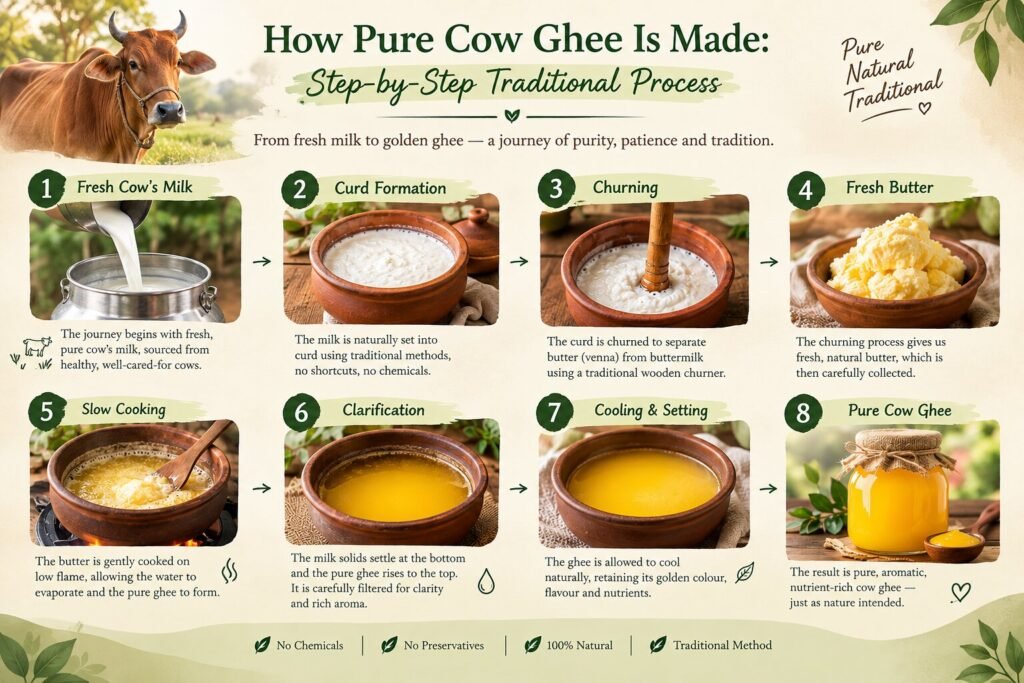
Ghee is not just “melted butter.” Real, traditional ghee takes time, patience, and care. Every jar of golden ghee goes through several stages before it reaches your kitchen. Here is the whole journey, from the first step to the last.
Step 1: Fresh Cow’s Milk
Everything starts with good milk. Quality ghee needs fresh, pure cow’s milk from healthy, well-fed cows. The better the milk, the better the aroma, taste, and colour of the ghee.
Step 2: Boiling and Cooling the Milk
The milk is gently heated to make it safe and clean, then cooled to lukewarm. This prepares it for setting into curd.
Step 3: Setting the Curd
A small spoon of curd starter is added to the lukewarm milk and left undisturbed overnight. By morning the milk turns into thick, creamy curd. This slow natural fermentation gives traditional ghee its rich, deep flavour.
Step 4: Churning the Curd
The curd is churned, traditionally with a wooden churner (called mathu in Tamil). A little water is added while churning. As you churn, the fat slowly separates and floats up as soft white butter, while the watery buttermilk is left behind.
Step 5: Collecting the Butter
The white butter (venn) is gathered by hand and washed with clean water to remove leftover buttermilk. This step keeps the ghee fresh and long-lasting.
Step 6: Slow Heating
The butter is put in a heavy-bottomed vessel and heated on a low flame. It melts, then begins to bubble and crackle as the water in it evaporates. Patience matters here. High heat burns the ghee and spoils the flavour.
Step 7: The Golden Moment
As the bubbling slows down and goes quiet, a beautiful nutty aroma fills the air. The milk solids settle at the bottom and turn light golden brown, and the ghee turns clear and golden. This is the sign the ghee is ready, and it is taken off the heat at exactly the right time.
Step 8: Cooling and Settling
The ghee is left to cool for a few minutes so the solids settle fully at the bottom of the vessel.
Step 9: Straining
The warm ghee is carefully strained through a clean cloth or fine filter. What remains is pure, clear, golden ghee with no water and no milk solids.
Step 10: Cooling and Packing
The ghee cools completely and is filled into clean, dry, airtight glass jars. It is stored away from moisture and direct sunlight so it stays fresh, aromatic, and grainy-soft.
Why This Slow Process Matters
Shortcuts like making ghee straight from packaged butter or cream skip the curd stage and the slow churning. The traditional way takes more time and more milk, but you get richer aroma, better taste, and the goodness people have trusted for generations.
How to Enjoy It
- A spoon on hot rice with dal or sambar
- On dosa, idli, and chapati
- In sweets like mysore pak and halwa
- For tempering and everyday cooking, since ghee handles high heat well
Pure ghee, made the slow way, the way it should be.
Bulk Orders and Wholesale Enquiries
Looking for pure cow ghee in larger quantities for your shop, restaurant, sweet stall, catering, or festival and gifting needs? We supply in bulk. Call, WhatsApp, or email us with the quantity you need, and we will share the price, packing options, and delivery details.
📍 Location
MR Karthik Complex,
Plot No. 18, Annai Matha Nagar, Sikkandar Savadi, Koodal Nagar, Podumbu,
Madurai, Tamil Nadu – 625018